
Assessment of an Individual’s Postural Condition in Standing Position – Front View
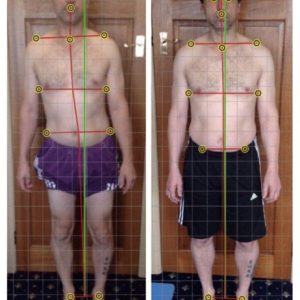
In this view, the specialist evaluates facial symmetry to check for issues such as torticollis.
The alignment of the shoulders is examined to determine if the individual has shoulder asymmetry.
The pelvic position is assessed to identify any height discrepancies.
The alignment of the knees is observed to determine whether the individual has knock knees or bow legs.
The position of the patella is analyzed to ensure it is moving correctly along its natural path without deviation.
Finally, the specialist examines the condition of the ankles and toes, checking for any rotation in the ankle or deviation in the toes.
Assessment of an Individual’s Postural Condition in Standing Position – Rear View
In this view, the specialist assesses head symmetry to identify potential issues such as torticollis.
The alignment of the shoulders is checked for asymmetry and compared with the findings from the front view.
The spine is examined to determine whether it is in a natural position or if there is scoliosis.
The pelvic position is assessed for any height discrepancies.
The alignment of the knees is observed to determine whether the individual has knock knees or bow legs.
The femur position is analyzed for any internal or external rotation.
The condition of the heel is checked to identify any rotations.
Assessment of an Individual’s Postural Condition in Standing Position – Right and Left Side Views
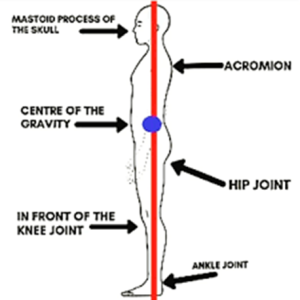
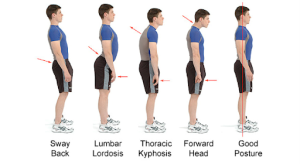
Is the neck and head positioned forward beyond the natural alignment?
How are the shoulders positioned? Are they rounded or protruding forward?
Has the curvature of the upper back increased, resulting in a kyphotic posture (commonly referred to as a hunchback)?
How is the curvature of the lower back? Does the individual have lordosis, a flat back, or another spinal condition?
Are the knees in a normal position, or do they exhibit hyperextension (genu recurvatum)?
At this stage, we understand why a corrective exercise specialist examines an individual’s posture from multiple perspectives. Following this assessment, the specialist must also evaluate the person’s gait. This additional analysis provides further insight into the function of the ankle, knee, pelvis, and spine during movement.
Next Step: Functional Testing and Medical Examination
With the physician’s examination and diagnosis, functional and specialized tests are conducted to assess the condition of the musculoskeletal system, movement patterns, and joint functionality.
Based on the gathered information, along with any available medical records or previous checkups, the specialist prescribes a treatment program or, as referred to in this field, an exercise prescription.
The physician analyzes the patient’s movement patterns, identifies overactive, underactive, and compensatory muscle groups, and, upon completing the evaluation, designs a training program aimed at optimizing movement capabilities, ensuring correct execution of exercises, and reducing soft tissue tension resulting from mechanical stress.
A specialist utilizing modern assessment and programming techniques helps individuals move more efficiently, recover faster, and return to their workout routines or professional activities sooner. This method ensures a comprehensive rehabilitative and educational session, offering a personalized program that continuously improves the individual’s condition. Corrective exercise is an exceptional complement for anyone involved in rehabilitation, fitness, or health-related fields.
Can My Ankle Position Affect My Spine?
Our body functions as an interconnected system, composed of muscular, joint, and neural chains. When an issue arises in the ankle, it alters force distribution across the foot and impacts the forces exerted from the ground to the foot. This directly affects the knee, which in turn influences the pelvis, the lumbar spine, and eventually the cervical spine and head. It’s all interconnected!
For example, a person with ankle pronation and flat feet is at risk of developing knock knees. As this condition progresses, the femur-pelvic angle increases, altering pelvic positioning. This pelvic misalignment subsequently changes the force dynamics in the lower back, leading to chronic back pain!
Our Mission and Objectives
Given the significance of enhancing workplace safety, employee comfort, productivity, and work quality, and considering the long-term effects of musculoskeletal disorders on employees after retirement, early detection and treatment of these conditions are of great importance.
For this reason, Iran Zamin Rehabilitation Clinic has implemented a postural assessment and screening program for employees.
For over 13 years, Iran Zamin Cardiac Rehabilitation Clinic has been offering specialized healthcare services in cardiology, pulmonology, sports medicine, physical medicine and rehabilitation, internal medicine, physiotherapy, nutrition counseling, psychological counseling, and technical orthopedics. Utilizing state-of-the-art equipment and a highly experienced medical team, the clinic has made significant strides in the diagnosis and treatment of musculoskeletal disorders.
Methodology
Due to the high prevalence of musculoskeletal abnormalities (such as forward head posture, rounded shoulders, kyphosis, lumbar lordosis, knock knees, bow legs, and flat feet) among office workers and other professionals, early detection and prevention of secondary complications are essential.
To address this issue, a comprehensive musculoskeletal assessment program for employees has been developed.
Steps of Implementation
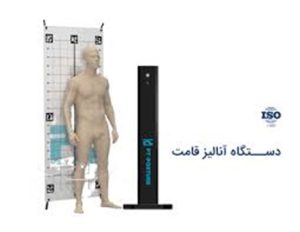
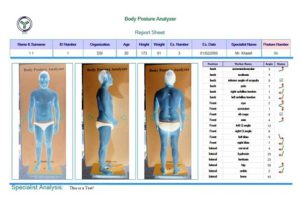
- Postural Analysis using a Posture Analyzer device
- Physical Examination by medical specialists and relevant experts
- Foot Scanning & Custom Insole Production (if deemed necessary by the physician)
- Treatment Program & Corrective Exercise Plan designed by specialists using innovative techniques