
 فارسی
فارسی  English
  العربية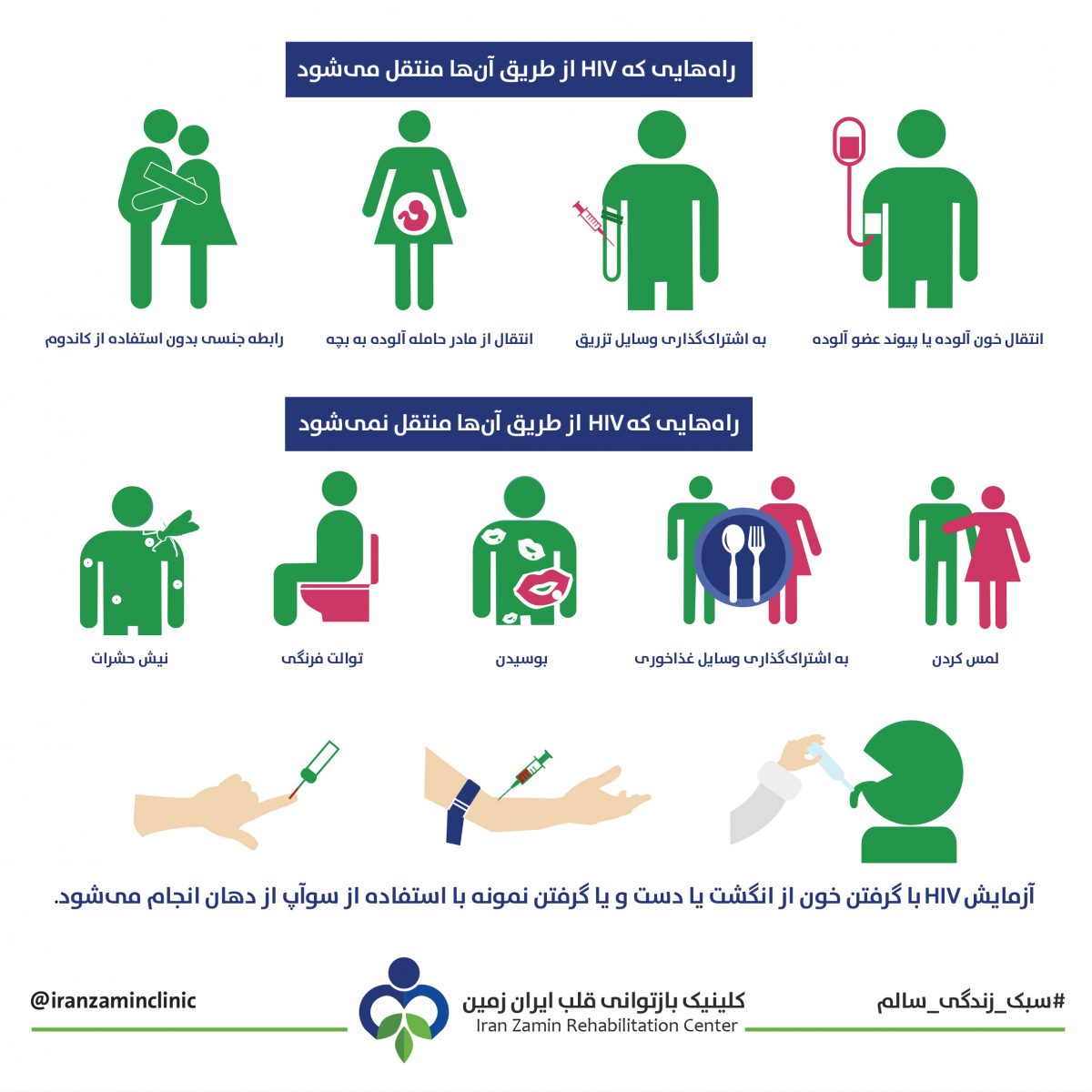
One of society's basic needs is awareness of how contagious and infectious diseases, including HIV, are and are not transmitted. Knowing these methods helps people protect themselves from infection while maintaining healthy relationships with people who are infected.
How Is HIV Transmitted?
- Transmission of infected blood or organ transplantation from an infected person to a healthy person is one route of HIV transmission.
- Sharing injection equipment between people is another route of infection, claiming many victims among people who use drugs each year.
- HIV can be transmitted from an infected pregnant mother to the fetus and to the baby during birth. The risk of mother-to-child transmission during pregnancy is reported at 15–20%, and nearly 50% during childbirth.
- Unprotected sexual intercourse is one route of HIV transmission. This is one of the main routes of infection among people who have multiple or unreliable sexual partners.
How Is HIV NOT Transmitted?
- Touching a person does not transmit HIV.
- Dry kissing (a closed-mouth or social kiss) does not transmit HIV. Wet (open-mouth) kissing also carries no risk of HIV transmission; however, since it involves potential contact with blood (especially if either person has oral or dental disease), it is not recommended with someone confirmed to have HIV.
- Contrary to some common beliefs and myths, insect bites do not transmit HIV.
- Using a sit-down toilet does not transmit HIV, although hygiene practices should still be observed.
- Sharing eating utensils with an infected person does not transmit HIV, although hygiene practices should still be observed.
Types of HIV Testing
HIV testing can be done using an oral swab to collect saliva, or by taking a blood sample from the finger or arm.
“By maintaining a healthy lifestyle, we can build a healthier world for ourselves and those around us.”
0 دیدگاه
دیدگاه خود را بنویسید