
 فارسی
فارسی  English
  العربية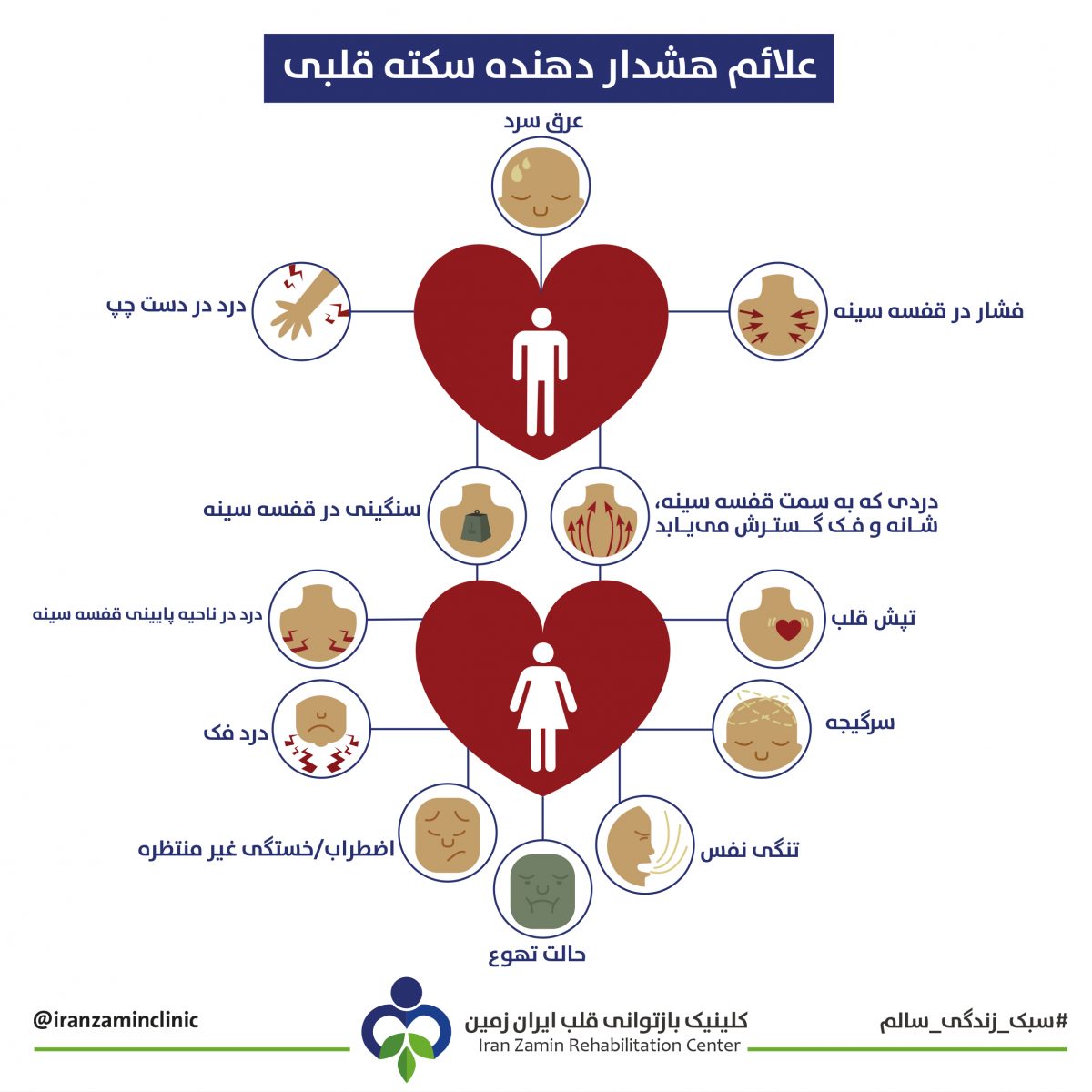
Heart disease is one of the leading causes of death worldwide. Many people may ignore its symptoms or attribute them to stress, fatigue, or digestive issues. But being aware of warning signs and seeing a doctor at the right time can save your life or the life of someone you love. In this article, we highlight some of the most important symptoms of heart disease.
1. Chest Pain and Discomfort
One of the most common symptoms of heart problems is a feeling of pain or heaviness in the chest. This pain may feel like pressure or burning, and in some cases can radiate to the arm, neck, or jaw. If this pain worsens with physical activity and eases with rest, it may be a sign of angina.
2. A Feeling of Pressure Behind the Breastbone
Instead of chest pain, some people feel pressure or a burning sensation behind the breastbone. This symptom often worsens with stress or intense physical activity and may indicate coronary artery problems.
3. Pain That Eases with Rest and Worsens with Activity
If your pain or discomfort eases at rest but intensifies again with physical activity, blood flow to the heart may be reduced. This can be a sign of narrowed coronary arteries that requires medical evaluation.
4. Pain Radiating to the Left Arm, Neck, and Jaw
Sometimes cardiac pain isn't limited to the chest and spreads to the left arm, neck, or jaw. If you feel such pain without an obvious cause, don't ignore it — it may be a sign of a heart attack.
5. Weakness and Early Fatigue
If you feel persistently tired for no particular reason, or become tired more quickly than usual during simple tasks, your heart may not be pumping enough blood and oxygen to your body. This can be a sign of heart failure.
6. Shortness of Breath
Unusual shortness of breath is another common symptom of heart disease. If you have trouble breathing while climbing stairs or lying down, take it seriously. Shortness of breath can indicate heart failure or valve problems.
7. Dizziness and Lightheadedness
Sometimes reduced blood flow to the brain causes dizziness or lightheadedness. This symptom may result from low blood pressure or cardiac arrhythmias (irregular heartbeat). If you experience frequent dizziness, be sure to discuss it with your doctor.
8. Heart Palpitations (Irregular Heartbeat)
If you feel your heartbeat is too fast, too slow, or irregular, you may have a cardiac arrhythmia. This can have various causes, some of which are serious and require medical evaluation.
9. Unusual Sweating
If you experience heavy sweating for no clear reason, especially at night or while at rest, take it seriously. Unusual sweating, especially alongside chest pain and nausea, can be a sign of a heart attack.
Why You Shouldn't Ignore These Symptoms
Symptoms of heart disease can vary from person to person. Some people may experience only one or two symptoms, while others may face several. The most important point is that if you notice any of these symptoms, seeing a cardiologist is essential. Early diagnosis and proper treatment can prevent more serious problems from developing.
✅ If you have any of these symptoms, avoid self-treatment and consult a specialist physician.
0 دیدگاه
دیدگاه خود را بنویسید